


Most English learners and plenty of native speakers stop and wonder about what kind of vs what kinds of at some point. Both phrases look almost identical, yet they ask for slightly different answers.
The short version: use what kind of when you want one type or category, and what kinds of when you want several types or a range. This guide explains the rule, shows real examples, covers common mistakes, and ends with a mini quiz so you can test yourself.
What Is the Difference Between What Kind of and What Kinds of?
The difference between what kind of vs what kinds of is about scope. “What kind of” asks about one general type, while “what kinds of” asks about multiple types or varieties. The noun that follows does not decide the choice. Your meaning does.
Key takeaway: One category in mind means “kind.” Several categories in mind means “kinds.”
Quick Comparison Table
This table sums up what kind of vs what kinds of at a glance.
| Feature | What kind of | What kinds of |
|---|---|---|
| Focus | One type or category | Several types or categories |
| Expected answer | A single answer, such as “mystery” | A list or range, such as “mystery, romance, and history” |
| Common nouns | Singular, uncountable, and often plural | Plural, or uncountable when varieties are meant |
| Example | What kind of car do you drive? | What kinds of cars do you like? |
| Feels like | Narrow and specific | Broad and open |
What Does “What Kind of” Mean?

What kind of asks the listener to name a type, category, or quality of something. It treats the answer as one group, even when the noun after it looks plural. It is the more common of the two phrases in daily speech.
What Kind of + Singular Noun
With a singular noun, what kind of is the standard choice. Example: “What kind of phone do you use?” The answer is one type, such as “a budget Android.”
Other examples: “What kind of person are you?” and “What kind of job do you want?”
What Kind of + Uncountable Noun
Uncountable nouns like music, advice, weather, and coffee pair naturally with what kind of. You cannot count them, so you ask about their type instead.
- What kind of music do you enjoy?
- What kind of advice do you need?
- What kind of weather is expected tomorrow?
What Kind of + Plural Noun: Can It Be Correct?
Yes, it can. “What kind of books do you like?” is correct and very common. The speaker is asking about one general type (a genre), even though “books” is plural.
This is why you should not choose by the noun alone. If you expect an answer like “thrillers,” what kind of works well. If you expect a spread of genres, switch to the plural form.
When Should You Use “What Kinds of”?
Use what kinds of when you want several categories, or when variety is the point of your question. It signals that you expect more than one answer. It is also a good fit when you are describing a range or a list.
What Kinds of + Plural Noun
The most typical pattern is “what kinds of” plus a plural noun. Example: “What kinds of pets can you keep in an apartment?” You would expect dogs, cats, fish, and maybe birds.
Notice that “kinds” itself is plural, so the noun after it is usually plural too.
Use It When Variety Is Important
When the range matters, choose the plural. A teacher might ask, “What kinds of sentences can you build with this verb?” because she wants several patterns, not one.
Hiring managers, researchers, and journalists often use this form for the same reason.
The Plural Form Makes Multiple Categories Clearer
The word “kinds” tells the listener to think in groups. Compare “What kind of exercise helps?” with “What kinds of exercise help?” The second one clearly invites a list: walking, swimming, strength training.
That clarity is the main benefit of the plural form.
What Kind of vs What Kinds of: The Easy Grammar Rule

The easy rule for what kind of vs what kinds of is this: pick “kind” for one category and “kinds” for many. You do not need to memorize noun lists. You only need to decide how wide your question is.
Ask Yourself: One General Category or Several Types?
Before you speak or write, ask one question: “Am I looking for one type or a group of types?” If you want one, use what kind of. If you want a group, use what kinds of.
Examples That Show the Difference
| One category | Several categories |
|---|---|
| What kind of dog do you want? | What kinds of dogs are good with children? |
| What kind of food do you cook? | What kinds of foods are high in fiber? |
| What kind of skill matters most? | What kinds of skills do employers value? |
A Simple Memory Trick
Think of buckets. Kind means one bucket. Kinds means more than one bucket.
Quick tip: If you can picture the answer as one label, use “kind.” If you picture a list of labels, use “kinds.”
Why Context Matters More Than a Simple Singular or Plural Rule
Context matters because the same sentence can be correct with either phrase, and each one changes the question slightly. The choice between what kind of vs what kinds of follows your intention, not a rigid grammar law. Good writers think about what answer they want.
Meaning Can Change the Best Choice
“What kind of movies do you like?” suggests a favorite genre. “What kinds of movies do you like?” suggests you want a fuller picture, maybe comedy, drama, and documentaries.
Both are grammatical. They simply ask for different amounts of information.
Plural Nouns Do Not Always Require “Kinds”
Many people think a plural noun forces “kinds.” It does not. Phrases like “what kind of shoes” and “what kind of problems” are normal because the speaker has one general type in mind.
The noun describes the topic. The word before “of” describes how many types you want.
Formal Writing Often Benefits From Greater Precision
In reports, surveys, and academic writing, the plural form is often clearer. “What kinds of evidence support this claim?” tells readers that multiple sources are expected.
In casual speech, people relax and use “kind of” more freely. In formal writing, precision helps.
Real-Life Case Study: How One Small Word Changes the Expected Answer
Here is an illustrative scenario, not a real survey. A gym owner wants to plan new classes and writes two versions of one question for members.
Version A: “What kind of exercise do you do?” Members tend to reply with one word, like “cardio” or “yoga.” Version B: “What kinds of exercise do you do?” Members tend to reply with a list, like “running, swimming, and weight training.”
For class planning, Version B gives richer data. For a quick check-in at the front desk, Version A is faster and friendlier.
Lesson: The word you choose shapes the answer you receive.
Common Mistakes With What Kind of and What Kinds of
The most common mistakes come from using rules of thumb instead of meaning. Each one below is easy to fix once you notice it. Knowing them will make your choice between what kind of vs what kinds of much more confident.
Mistake 1: Choosing Only by the Following Noun
Writers often see a plural noun and automatically choose “kinds.” That is not required. “What kind of cookies do you like?” is perfectly correct if you want one general type.
Mistake 2: Using “What Kinds of” With an Uncountable Noun Without Meaning Varieties
“What kinds of advice do you need?” sounds odd unless you really want several categories of advice, such as career, legal, and personal. Without that meaning, “what kind of advice” is the better fit.
Mistake 3: Using the Plural Form When Only One Classification Is Needed
If you only need one answer, “kinds” can feel too heavy. “What kinds of car did you buy?” is awkward because a person buys one car. Say “What kind of car did you buy?”
Mistake 4: Forgetting the Meaning of “Of”
The word “of” connects the type to the thing. It tells you that a category is coming next, so do not drop it. Say “What kind of tea do you like?” not “What kind tea do you like?”
Mistake 5: Overthinking Every Sentence
Sometimes both versions work and the difference is tiny. Do not freeze up. Pick the one that matches the answer you expect and move on.
What Kind of Examples Show These Mistakes?
Here are quick fixes you can scan:
- Wrong: What kinds of car did you buy? Better: What kind of car did you buy?
- Wrong: What kind tea do you like? Better: What kind of tea do you like?
- Weak: What kinds of advice do you need? Better: What kind of advice do you need?
How to Choose the Correct Phrase Step by Step
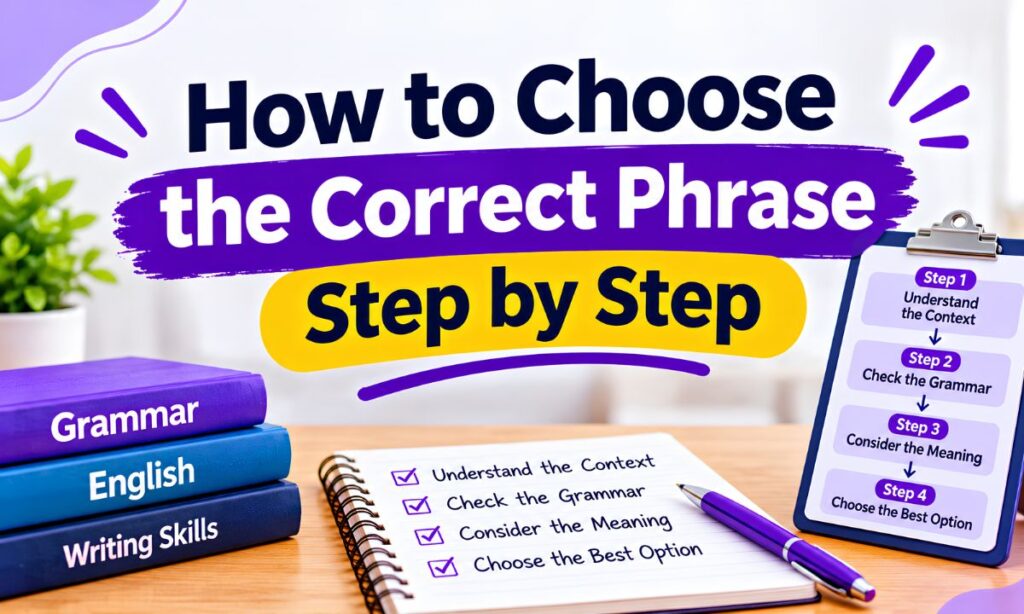
You can choose the right phrase in five quick steps. This process works for any sentence that uses what kind of vs what kinds of. It takes only a few seconds once you practice.
Step 1: Identify What You Are Asking About
Name the topic first: music, pets, jobs, food. This keeps you focused on the real question.
Step 2: Look at the Noun
Check whether the noun is singular, plural, or uncountable. Singular and uncountable nouns usually point to “kind.” A plural noun is only a hint, not a rule.
Step 3: Decide Whether Variety Is the Main Focus
Ask yourself whether the range is the point. If the variety matters, choose “kinds.” If not, stay with “kind.”
Step 4: Check Your Expected Answer
Imagine the reply. One label means “kind.” A list of labels means “kinds.”
Step 5: Read the Sentence Naturally
Say it out loud. If it sounds smooth, it is probably right. If it sounds clumsy, try the other option.
What Kind of vs What Kinds of in Everyday English
In everyday English, what kind of is far more common in casual talk, while what kinds of shows up when people want a fuller list. The right choice depends on the setting and the answer you want.
Talking About Preferences
“What kind of music do you like?” works in a first conversation. “What kinds of music do you listen to when you study?” invites a longer answer.
Asking About Problems
“What kind of problem are you having?” is perfect for tech support because they need one issue. “What kinds of problems do new users face?” suits a training session.
Talking About Products
Shoppers say, “What kind of laptop is best for video editing?” Store managers ask, “What kinds of laptops should we stock this season?”
In Education
Teachers often ask, “What kind of sentence is this?” when checking one example. They ask, “What kinds of sentences can we make with this rule?” when they want brainstorming.
In Professional Communication
In meetings, “What kind of support do you need?” is direct and friendly. “What kinds of risks should we plan for?” signals that you want a thorough list.
A 2025 to 2026 Content and Clarity Insight: Why Precise Questions Matter
Precise questions matter more now because search engines, voice assistants, and AI tools respond directly to the exact wording you use. A vague question often gets a vague answer. A well-scoped question gets a useful one.
This is why the difference between what kind of vs what kinds of matters beyond grammar class. Asking “What kinds of keywords help a small blog?” signals that you want a range of ideas. Asking “What kind of keyword is best for a new blog?” signals that you want one clear recommendation.
Practical tip: When you write headings and questions for readers, choose the phrase that matches the answer you plan to give.
What Kind of vs What Kinds of: Examples Side by Side
Seeing both phrases next to each other is the fastest way to understand them. Each pair below shows how what kind of vs what kinds of changes the question.
Books
- What kind of book are you reading? (one genre or title type)
- What kinds of books do you enjoy? (several genres)
Food
- What kind of food does she cook? (one cuisine)
- What kinds of food are common at festivals? (many dishes)
Exercise
- What kind of exercise is best after surgery? (one recommended type)
- What kinds of exercise can improve balance? (a range of options)
Questions
- What kind of question is this? (one classification)
- What kinds of questions appear on the exam? (several formats)
Skills
- What kind of skill do you want to learn first? (one skill area)
- What kinds of skills do designers need? (a broad list)
Clothes
- What kind of clothes do you wear to work? (one style, like formal)
- What kinds of clothes are popular this winter? (multiple styles)
Expert Tips for Using Both Phrases Naturally
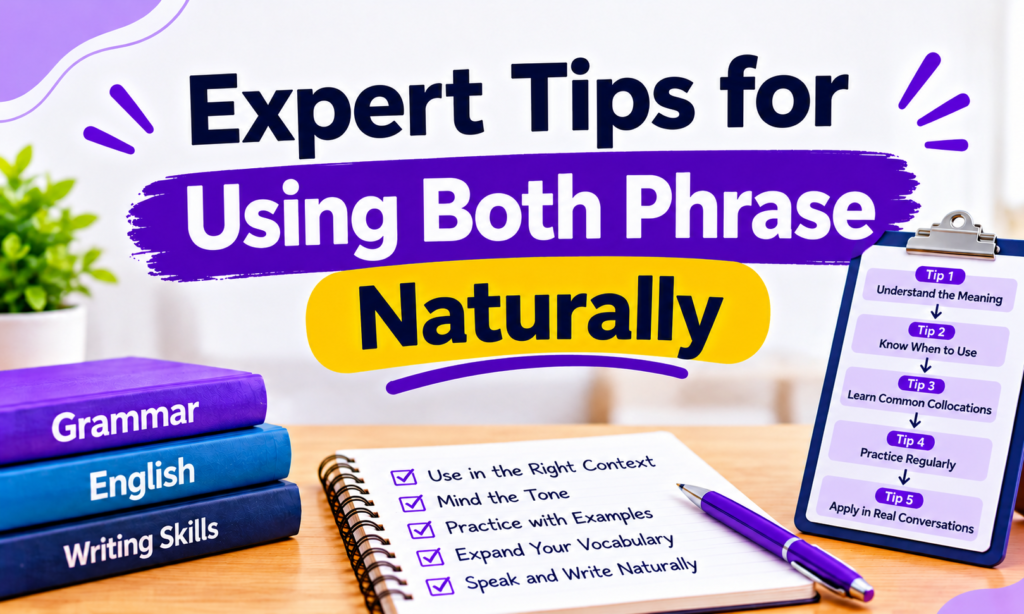
The best way to use what kind of vs what kinds of naturally is to focus on your goal, not on a memorized rule. These five tips will keep your writing clear and your speech smooth.
Think About the Scope of Your Question
Narrow scope points to “kind.” Wide scope points to “kinds.” Decide how much information you want before you start the sentence.
Use “Kinds” When Listing Several Categories Makes Sense
If your answer will naturally be a list, the plural form sets that expectation. It helps readers prepare for a longer reply.
Do Not Treat Plural Nouns as an Automatic Signal
A plural noun is a clue, not a command. “What kind of apples” is fine when you mean one variety group.
Be More Specific in Formal Questions
In surveys, interviews, and reports, vague wording can confuse people. Use “kinds” when you want breadth and “kind” when you want depth.
Learn Through Real Examples
Read and listen to native content. Notice which phrase appears and what kind of answer follows. Patterns will start to feel natural.
Mini Quiz: What Kind of vs What Kinds of
Test yourself with these 18 questions on what kind of vs what kinds of. Each one includes the answer right below it. Try to answer before you read the solution.
1. Pick the Right Phrase
“What kind of / What kinds of pets do you have at home?” You expect a list of animals.
Answer: What kinds of.
2. Fill in the Blank
“What … music do you enjoy most?” You want one genre.
Answer: kind of.
3. General Preference Challenge
Which question suits a single genre answer: “What kind of books do you like?” or “What kinds of books do you like?”
Answer: The first one, though both are grammatical.
4. Spot the Variety
Which asks for variety: (A) What kind of food do you cook? (B) What kinds of food do you cook?
Answer: B.
5. Fill in the Blank
“What … advice did your mentor give you?” You mean one type of advice.
Answer: kind of.
6. Choose the Natural Question
Which is more natural: “What kind of weather is expected tomorrow?” or “What kinds of weather is expected tomorrow?”
Answer: The first one.
7. One or Many?
“What kinds of skills does this job need?” Does it expect one answer or many?
Answer: Many.
8. Fill in the Blank
“What … trees grow in this region?” You expect several species.
Answer: kinds of.
9. Quick Grammar Check
Is “What kind of person are you?” correct?
Answer: Yes. It uses a singular noun and asks about one type.
10. What Would You Ask?
You want to know one favorite movie genre. Which phrase fits?
Answer: What kind of movies do you like?
11. Fill in the Blank
“What … exercise help with back pain?” You want a broad range of options.
Answer: kinds of.
12. Can You Spot the Broad Question?
Which is broader: (A) What kind of laptop do you need? (B) What kinds of laptops does the store sell?
Answer: B.
13. True or False Challenge
“What kinds of” can be used with an uncountable noun when you mean varieties, such as “What kinds of water are sold here?”
Answer: True.
14. Fill in the Blank
“What … clothes do you wear to work?” You mean one style, such as formal.
Answer: kind of.
15. Choose the Best Question
You want to know all the varieties a bakery sells. Which is best: “What kind of bread do you bake?” or “What kinds of bread do you bake?”
Answer: The second one.
16. The Expected Answer Test
If you expect the reply “Italian, Thai, and Mexican,” which phrase did you probably use?
Answer: What kinds of.
17. Fill in the Blank
“What … questions do interviewers usually ask?” You want several categories.
Answer: kinds of.
18. Final Mini Challenge
You are writing a business survey. Which phrase fits “… customers do you serve?” if you want a range of customer groups?
Answer: What kinds of. Use “what kind of” only if you want one main segment.
References
For deeper checking, consult these well-known dictionary and usage resources:
- Cambridge Dictionary, entries and usage notes on “kind”
- Merriam-Webster, entry for “kind” and usage guidance
- Oxford Learner’s Dictionaries, entry for “kind”
- Collins English Dictionary, entry for “kind”
Frequently Asked Questions
Is “what kind of” singular or plural?
What kind of is grammatically singular because “kind” is a singular noun. It can still be followed by a plural noun, as in “What kind of shoes do you wear?” The phrase points to one general type.
Is “what kinds of” always followed by a plural noun?
Usually, yes. “What kinds of cars” is the typical pattern. An uncountable noun can follow it when you mean varieties, such as “What kinds of cheese do you sell?”
Which is correct: “What kind of books” or “what kinds of books”?
Both are correct. Use “what kind of books” for one general type, like a genre. Use “what kinds of books” when you want several types.
Can I say “what kind of music”?
Yes. Music is uncountable, so what kind of music is the most natural form. Use “what kinds of music” only when you want a range of genres.
Is “what type of” the same as “what kind of”?
In most everyday cases, yes. “What type of” and “what kind of” both ask about a category. “Type” can feel slightly more formal or technical, but they are often interchangeable.
Should I use “what kinds of” when I expect several answers?
Yes. If you expect a list, what kinds of sets that expectation clearly. It tells the listener to give more than one example.
What is the easiest way to remember the difference?
Think of buckets. One bucket means “kind,” and several buckets mean “kinds.” That quick picture solves most cases of what kind of vs what kinds of.
Final Thoughts
The choice between what kind of vs what kinds of comes down to one idea: how wide is your question? Pick “kind” for a single category and “kinds” for a range. The noun after the phrase is a clue, but your intended answer is what decides.
Keep the bucket trick in mind, read your sentence out loud, and trust your ear. With a little practice, this small grammar point will feel automatic.

Abdul Rehman is a passionate writer and meaning enthusiast who enjoys exploring the meanings, origins, and interpretations of words, names, phrases, and expressions. As an author at Meanifi.com, he is dedicated to helping readers understand words and their meanings in simple, clear, and easy-to-follow language.
